Chimneys and leadwork
Lead flashing and leadwork in Bury St Edmunds, Ely and Thetford
Stepped flashings, soakers, back gutters and valleys, cut into the joint and dressed by hand. Not sealed over with mastic.
Free quote for lead flashing and leadwork
Tell us about the roof and we will come out and look at it. No charge and no obligation.
-
 Expert Roofer Verified
- 4.9 Google reviews
- Free survey and a written quote
- Public liability insurance verified
- Family run, owner on every job
- 24/7 emergency call out
How lead flashing and leadwork works
Leadwork is where most roofs actually leak, and it is the part most often bodged. Lead has to be cut into the mortar joint, wedged, and left free to move, because it expands and contracts more than anything around it. Sealed rigidly, or run in lengths that are too long, it splits along the fold within a few years.
If you can see mastic or sand and cement along a flashing line, someone has covered a problem rather than fixed it. Those repairs shed water for a season or two, then trap it behind the covering, and the damage underneath is always worse than it would have been. Cutting it out and redressing it properly is the only permanent answer.
Code matters. Code 3 is too thin for most abutments and it fatigues. Code 4 is the normal domestic choice for flashings and soakers, code 5 for valleys, back gutters and anything that carries water rather than just shedding it. It is not an upsell, it is the difference between a detail that lasts thirty years and one that lasts five.
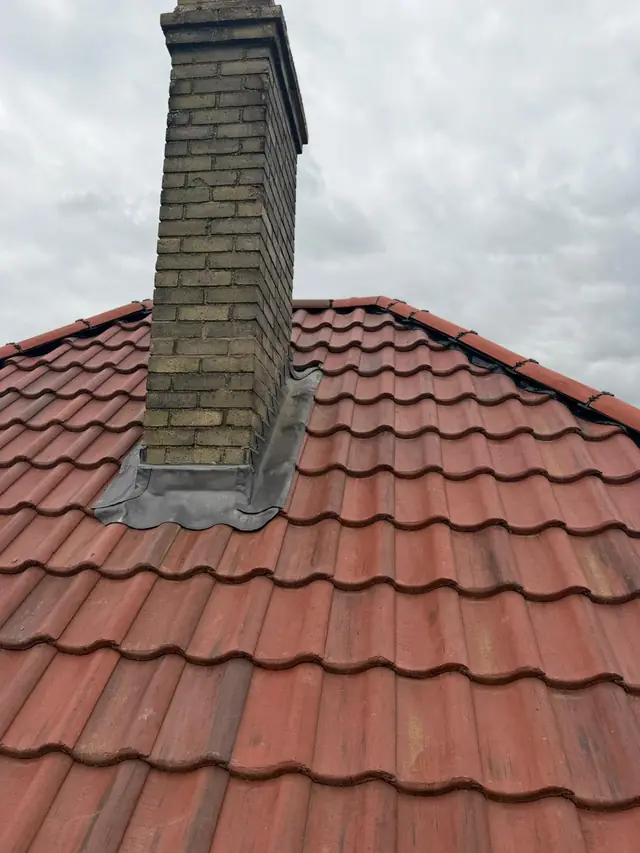
Chimney flashings are four separate details, not one. Soakers interleaved with the tiles up each side, stepped cover flashings chased into the brick joints over the top of them, an apron across the front and a back gutter behind. Skip any one of them and the stack leaks, which is why a stack sealed all round with mortar is a stack that will leak.
Patination oil is not cosmetic. New lead left untreated reacts with rain and runs a white carbonate stain down whatever is underneath it, which on a rendered or light brick elevation is very visible and hard to remove. Wiping new lead with patination oil at the end takes minutes and prevents it entirely.
What the job includes
- Old flashing and any previous mastic or cement repair cut out
- New chase cut into the mortar joint, not into the face of the brick
- Code 4 or code 5 lead as the detail requires, in correct lengths
- Soakers interleaved with the tiles or slates where the roof meets a wall
- Back gutters and cover flashings to the upper side of a chimney
- Valley linings replaced with proper laps and clips
- Lead wedged and pointed in, then patinated
Signs you need it looking at
- Damp on a chimney breast or where a roof meets a wall
- Mastic or cement visible along a flashing line
- Lead lifted, rippled or peeled away from the brickwork
- Staining in the loft directly below a valley
- Water coming in on one side of a stack only
How we renew lead flashing
- Find where it has failed. Splits along the fold, flashings lifted out of the joint, mastic smeared over the top, or soakers missing under the tiles.
- Strip the old lead. Old lead, mastic and sealant come off so the new lead goes into a clean joint.
- Cut and dress. New sheet lead cut and dressed to the roof, in lengths short enough to move with heat without splitting.
- Fix into the brick. The top edge goes into a raked out mortar joint, wedged with lead and pointed, so it cannot pull out in wind.
- Patinate and photograph. Patination oil on the new lead so it does not stain the tiles, and photographs of the finished junction.
Leadwork we do
- Stepped and cover flashings. Where a pitched roof meets a wall or a chimney side.
- Back gutters and aprons. At the top and bottom of a chimney stack, where water runs hardest.
- Lead valleys. Where two roof slopes meet, renewed in sheet lead on a proper board.
- Soakers. Lead under each tile course at an abutment, working with the flashing above.
How long it takes
Renewing the flashing at one chimney or one abutment is a day. Several junctions, or a lead valley, run to two or three days.
What affects the price
- How many metres of lead and how many junctions
- The weight of lead the junction needs
- Access: a roof ladder, a tower or a scaffold
- Whether the brickwork needs raking out and repointing as well
We price leadwork after seeing it, with photographs of every junction. Book on the free quote page.
Looking after it afterwards
Good leadwork needs nothing. Look at it after storms, and never let anyone seal over it with mastic: that traps water behind the lead and rots the junction.
Our work
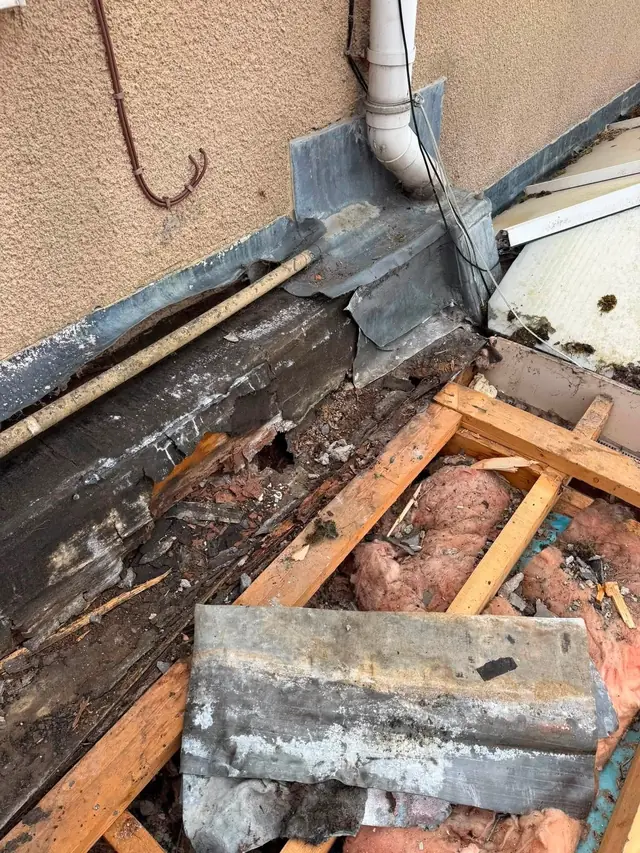
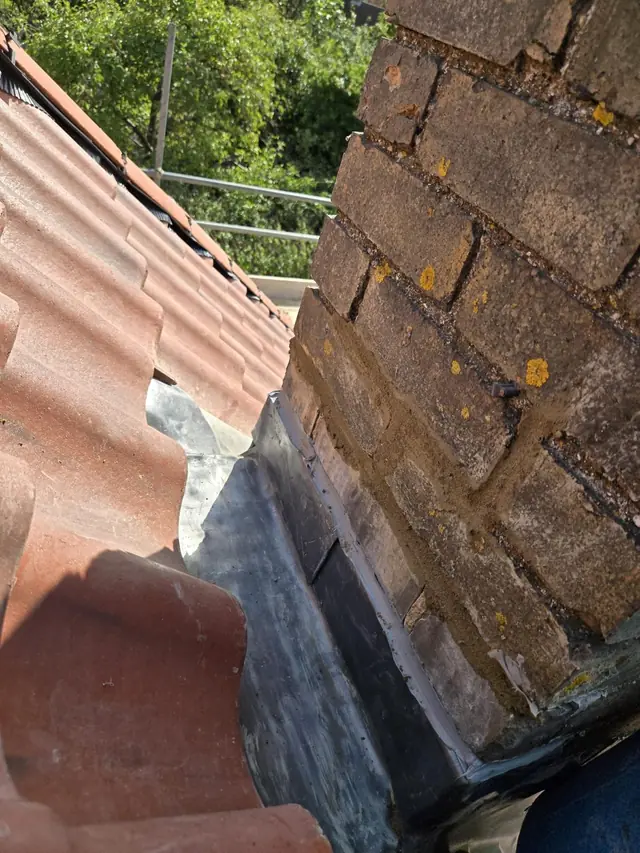
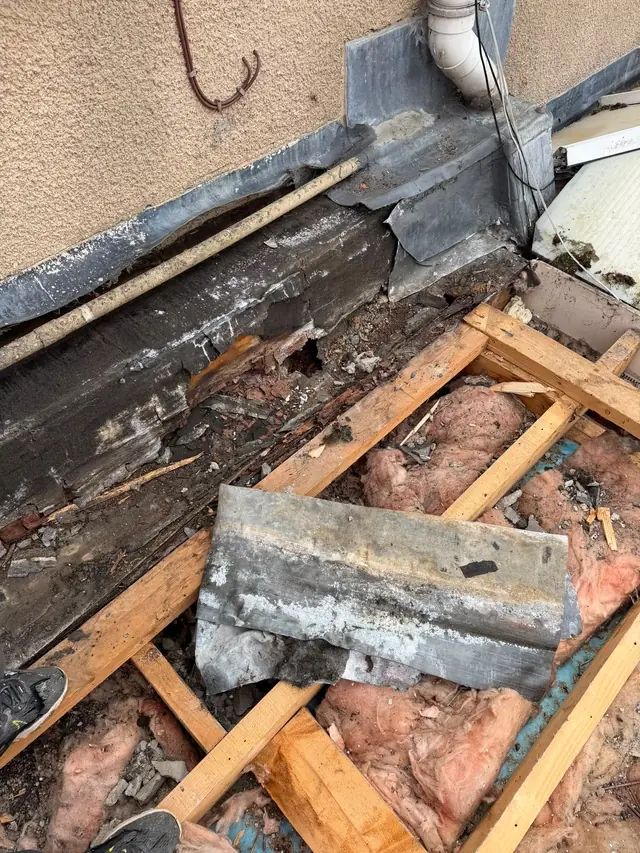
Lead flashing and leadwork we have done
Photographs from Flash Roofing jobs. No stock images anywhere on this site.
Areas
Lead flashing and leadwork near you
- Lead flashing and leadwork in Bury St EdmundsSuffolk · IP28, IP29, IP30, IP31, IP32, IP33
- Lead flashing and leadwork in ElyCambridgeshire · CB6, CB7
- Lead flashing and leadwork in LittleportCambridgeshire · CB6
- Lead flashing and leadwork in ThetfordNorfolk · IP24
- Lead flashing and leadwork in NewmarketSuffolk · CB8
- Lead flashing and leadwork in MildenhallSuffolk · IP28
- Lead flashing and leadwork in HaverhillSuffolk · CB9
- Lead flashing and leadwork in Downham MarketNorfolk · PE33, PE34, PE38
Reviews
What customers say
The team repaired a leak in my roof, delivering a brilliant service from start to finish. Competitively priced and I would highly recommend!!
I’ve just had a re-roof done by Flash roofing, we initially had 3 quote and they were by far the most competitive while making us at ease with everything they offered! Really happy with the outcome and the job was left tidy - couldn’t recommend this team enough!
Great service from start to finish. The team arrived on time, explained everything clearly, and completed the work to a high standard. The roof looks solid again, and everything was left tidy. Reliable, professional, and fairly priced, highly recommend.
FAQs
Questions we get asked
Why does lead flashing fail?
Most often because it was run in lengths that are too long. Lead moves a great deal with temperature, so a run over about one and a half metres without a joint will fatigue and split along the fold. The other common cause is lead that was face fixed or sealed instead of chased into the joint.
Can you repair lead rather than replace it?
Sometimes. Lead can be dressed back down, re-wedged and repointed if it is sound and just loose. If it has split, been patched with mastic, or is the wrong code for the detail, replacing that section is the honest answer.
How long should new leadwork last?
Properly detailed lead in the right code, cut into the joint and free to move, is commonly expected to outlast the roof covering around it. It is one of the few materials on a house that is genuinely long term.
Can leadwork be done in wet weather?
Lead can be dressed in light rain, and pointing needs a dry spell. We plan around the forecast and keep the junction covered between visits.
Is there an alternative to lead if theft is a worry?
Yes. Lead substitute flashings exist and have no scrap value. On a listed or period property we recommend lead, and we fix it so it cannot be peeled out in one piece.
Get a quote for lead flashing and leadwork
Free survey, photographs of what we find and an itemised written quote. Call 01284 339 233 or send the form.